
By Lloyd Lew Founder, CompanyConnect.Tech
Why this topic matters
In 2025, most businesses are hitting the same wall:
Teams are overwhelmed, growth relies on “hero employees,” and every month a new tech tool gets added to the stack creating more complexity instead of efficiency.
The companies that win today aren’t the ones with the biggest teams.
They’re the ones with the best systems.
This newsletter exists to help you build those systems.
1. The Real Reason Your Company Isn’t Scaling (Yet)
Most organisations don’t have a “productivity problem.”
They have an operational inconsistency problem.
Here’s what I see across real estate, finance, consulting, construction, medical practices, agency teams, and SMEs:
- Information is kept in people’s heads
- Staff use different methods for the same task
- Work depends on reminders, WhatsApp chats, and memory
- No unified view of sales, delivery, KPIs, or performance
- Founders get dragged into daily administration they shouldn’t touch
What this really means:
Your systems are weak, not your staff.
Companies grow when decision-making becomes predictable, automated, and unified — not when another person is hired to patch the gaps.
2. The “Systemisation Curve”: The 4 Stages Every Fast-Growing Business Goes Through
Most businesses fit into one of these 4 stages:
Stage 1 Survival Mode
- Everything lives in WhatsApp, email, or Google Drive
- The founder manages everything
- No reporting, no dashboards, no automation
- Every task is reactive
- High stress, no leverage
Stage 2 Organised Chaos
- A CRM may exist but isn’t used properly
- Operations rely on manual updates
- Onboarding new staff is inconsistent
- Data exists, but insights don’t
- Progress depends on one or two key employees
Stage 3 Operational Clarity
- Standardised workflows
- Automation handles the admin
- Roles and responsibilities are clear
- Every department sees the same truth
- KPIs are visible and updated instantly
Stage 4 System-Driven Scaling
This is where the magic happens.
Your company begins to run on systems not on memory, emotion, or people’s moods.
- Workflows trigger themselves
- AI handles admin, updates, emails, and reminders
- Team members focus on results, not data entry
- Leadership makes decisions based on real-time dashboards
- Growth becomes predictable
Most companies never reach Stage 4.
But the ones that do scale faster, with fewer people, and dramatically lower operational costs.
3. What a Well-Built Operating System Looks Like
A real operating system is NOT:
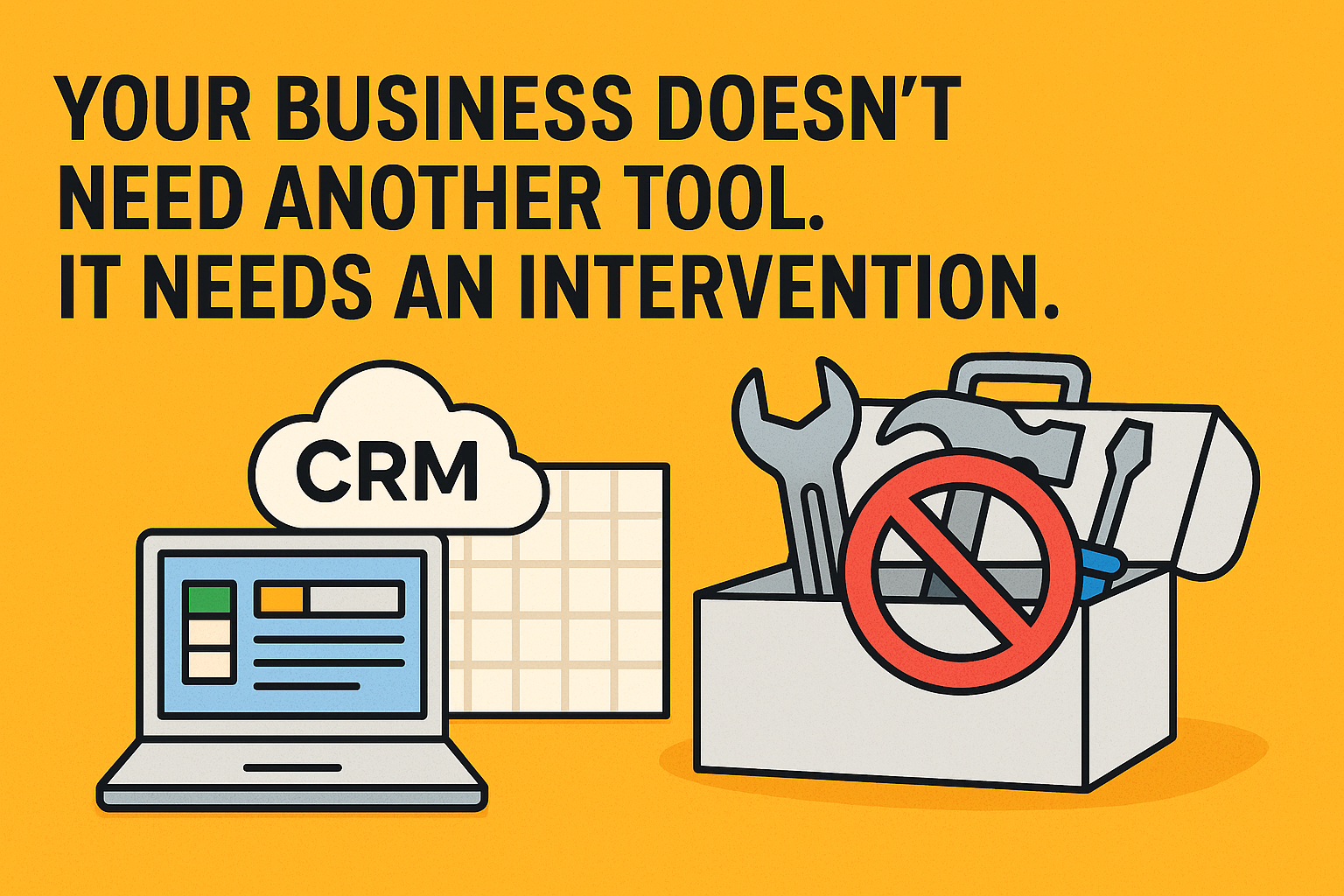
- Just a CRM
- A dashboard
- A bunch of automations
- A place to store contacts
A real OS is everything working together:
✔ CRM
Every lead, deal, client, project, and relationship tracked properly.
✔ Operations
Tasks assigned, deadlines automated, team accountability built in.
✔ Finance + Invoicing
Revenue, renewals, recurring income, pipeline forecasting.
✔ HR + Onboarding
Role-based permissions, SOPs, and automated employee setup.
✔ AI Agents
Automated follow-ups, email writing, workflows, and knowledge retrieval.
✔ Dashboards
A real-time view of your entire business in one place.
This is how top-performing companies operate.
Not because they’re lucky — because they’re structured.
4. Real Example of Business Transformation
(Shortened for privacy if you want, I can expand this into a case study for your website.)
A growing company with 150+ staff asked us to build a complete back-office operating system inside Monday.com.
They had:
- Dozens of manual processes
- Inconsistent paperwork
- No automation
- No unified system
- Heavy workload on a few key staff
After the build-out, they had:
- A fully automated OS
- Department-specific workflow hubs
- AI-assisted processes
- Unified reporting
- 50–70% reduction in manual admin
- Faster onboarding for new hires
- Clear accountability across the entire organisation
The difference wasn’t “more software.”
It was structure.
5. Why AI Is Not Replacing Jobs It’s Replacing Inefficiency
AI doesn’t remove people.
It removes:
- Slow manual tasks
- Human error
- Repetitive admin
- Forgotten follow-ups
- Bottlenecks in communication
- Lack of standardisation
Teams don’t become smaller.
They become more valuable.
Your best people get to focus on real work not checking boxes.
6. The Most Common Operational Weaknesses We Fix (Across All Industries)
Sales
- Leads slipping through cracks
- Inconsistent follow-ups
- No pipeline transparency
- Poor forecasting
Operations
- Projects never following one flow
- No “single source of truth”
- Staff doing tasks differently
- Rework across departments
Management
- No real data for decision-making
- No KPI tracking
- No way to measure team performance
Finance
- Delayed invoicing
- Unclear revenue pipeline
- No renewal management
- Missing recurring billing tracking
If any of these sound familiar, you’re not alone.
You’re simply at Stage 2 or Stage 3 and ready for Stage 4.
7. How to Know Your Company Is Ready for a Full Operating System Build
You’re ready if:
- You rely too heavily on key staff
- You constantly feel like you’re “catching up”
- You want to scale without hiring too many more people
- Reporting is always late or inaccurate
- Your CRM is not used properly (or at all)
- Processes are documented but not executed
- You want AI to handle admin, not humans
- You want predictable operations
- You want the business to function even when you’re not there
If you nodded to even two of these you’re in the transformation zone.
8. The Purpose of This Newsletter
Every edition, I’ll break down one topic linked to:
- Monday.com mastery
- AI in business
- Operational design
- Workflow automations
- Sales optimisation
- Real case studies
- Practical tools you can apply immediately
My goal is simple:
Help you build a company that runs on systems not stress.
9. What You Can Do Next
If you want to follow the full series, hit Subscribe.
Each newsletter will unpack one new system, workflow, strategy, or case study your business can implement immediately.
If you’d like me to build your company’s operating system in Monday.com, you can message me anytime.